

Banning under Emergency Supplies and Services Law 2012
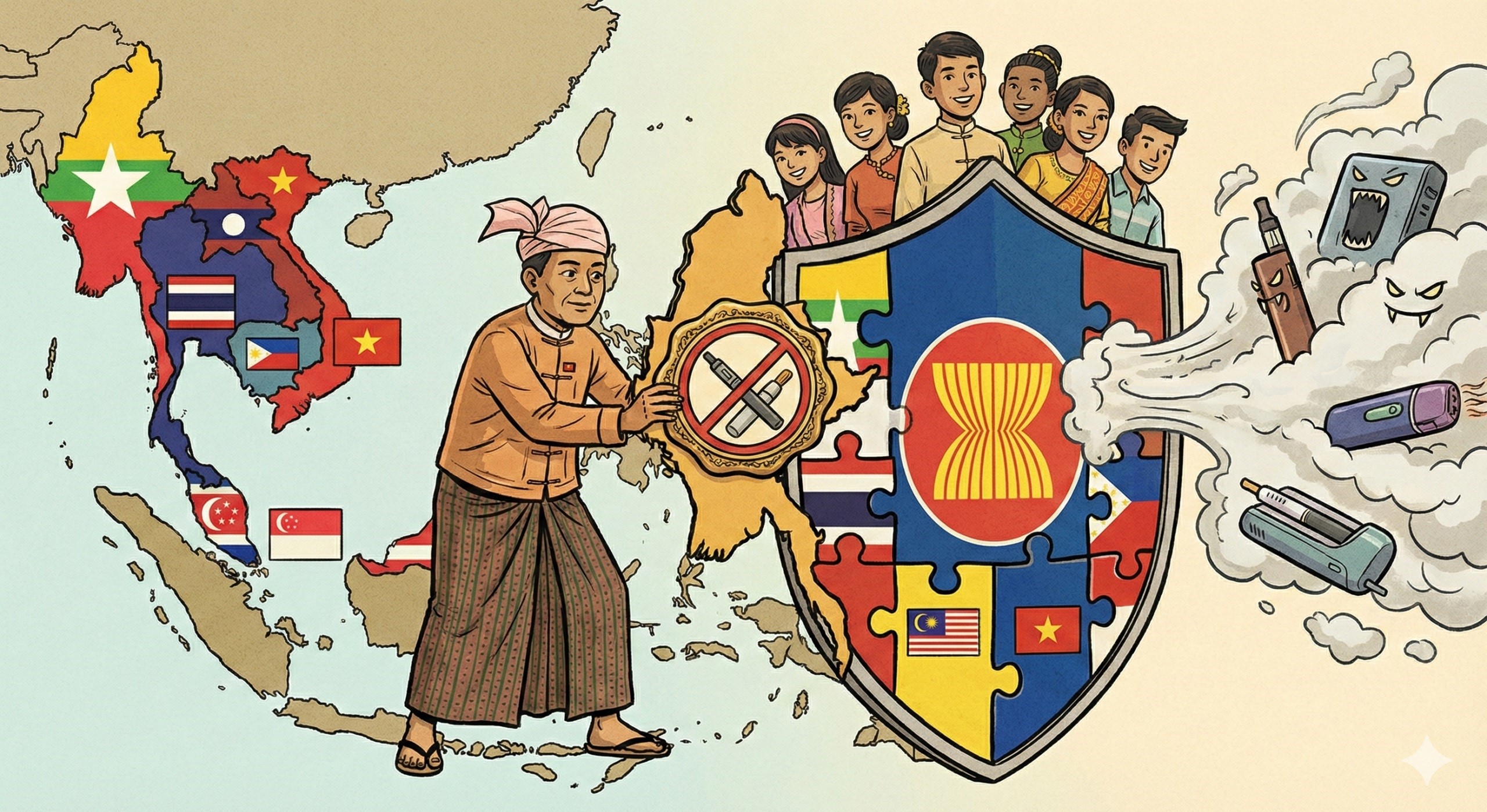
15 May 2026: Myanmar has officially banned e-cigarettes, electronic shisha, and related accessories, becoming the eighth country in Southeast Asia to do so. The decision, issued on 18 February 2026 by the Myanmar Ministry of Health under Cabinet authorization, prohibits the import, export, sale, possession, storage, transport, distribution, use, and consumption of these products under the Essential Supplies and Services Law.
The ban comes amid growing concerns about the increasing use of e-cigarettes among young people in the region. Studies show that e-cigarette use leads to nicotine addiction, respiratory and other health problems, and may also serve as a gateway to cigarette smoking. Health authorities and public health organizations point out that the marketing of e-cigarettes also often targets youth with flavored products and aggressive social media advertisements.
Myanmar now joins Brunei Darussalam, Cambodia, Lao PDR, Singapore, Thailand, Timor-Leste, and Vietnam, which previously enacted bans to protect public health and reduce population exposure to nicotine.
“Our progress in tobacco control, including the successful plain packaging policy in 2024, shows the government’s commitment to a healthier future,” said Dr. Kyaw Kan Kaung, Deputy Director-General of the Ministry of Health. “With the law passed, we now turn our focus on law enforcement and strengthening subnational leadership to make sure the ban is fully carried out.”
Dr. U Than Sein, President of the People’s Health Foundation (PHF), said, “This achievement shows the dedication of Myanmar’s national leaders and the importance of collaboration between the government and civil society to strengthen public health in Myanmar.”
Dr. Ulysses Dorotheo, Executive Director of the Southeast Asia Tobacco Control Alliance (SEATCA) added that “Myanmar’s decision to ban e-cigarettes is a significant step for public health in Southeast Asia. It should encourage the remaining ASEAN member states, Indonesia, Malaysia, and the Philippines, to take similar action. Strong national leadership, evidence-based policies, and strategic partnerships are essential to protect people and ensure a healthier, nicotine-free future.”
The Ministry of Health said the ban will be complemented by capacity building initiatives, law enforcement, and subnational leadership programs to ensure compliance, prevent illegal trade, and protect public health. SEATCA reaffirmed its support for these efforts, emphasizing the importance of regional cooperation and shared strategies across ASEAN to reduce nicotine addiction and strengthen tobacco control throughout Southeast Asia.
Leave a Reply